

The debate over e-bikes and e-motos often gets framed as a fight between freedom and regulation. But that misses the point.
A good law should do three things:
- Protect the public
- Treat similar vehicles similarly
- Avoid punishing low-risk vehicles with rules meant for high-risk machines
Right now, state laws don’t consistently do that. Current state laws are literally a patchwork quilt of similar and distinctly unique regulations.
A Patchwork Of Regulation
Some states use the familiar standardized three-class e-bike system. Others use older moped-style laws written before modern electric mobility existed. Some leave loopholes that allow electric motorcycles to be marketed as bicycles, while others overreach and risk sweeping legitimate e-bikes into motor vehicle regulations.
Neither extreme is ideal.
A logical and fair state law should recognize that not every electric two-wheeler belongs in the same category.
A 500-watt pedal-assist commuter bicycle is not the same thing as a 3,000-watt throttle-driven machine capable of motorcycle speeds.
But a 750-watt or higher cargo e-bike limited to bicycle-like performance may not deserve the same treatment as a motorcycle, either.
Good laws should reflect those differences.
Right now, the Federal laws as I’ve outlined in a previous article, clearly define the line between electric bicycles as consumer products, and electric motorcycles as motor vehicles.
But I’ve also previously noted, there is this important difference:
– Federal laws define the specific differences between device types, and how they are classified.
– States are responsible for taking those definitions and making laws for use within their borders that regulate how each type of device is to be treated.
Start With a Clear Principle
The most important principle is simple:
Regulation should follow performance and risk — not marketing labels.
Calling something an “e-bike” doesn’t make it one. Likewise, exceeding an arbitrary technical threshold should not automatically turn a low-risk vehicle into a fully regulated motorcycle.
State laws should focus on:
- Motor-assisted speed
- Motor power output
- Vehicle weight
- Presence or lack of pedals
- Intended operation (bicycle-like vs motorcycle-like)
- Real-world safety risk
That framework would be much more rational than arguing about wattage or appearance.
Let’s Stop Nitpicking Over Numbers
As even critics of current watt-based laws have noted, nominal motor ratings can be inconsistent and difficult to enforce in isolation. Some others will point to the Consumer Product Safety Act (CPSA) and say, “it says less than 750 watts!” But they forget that this same law also parenthetically says “1 horsepower”; and these people will ignore the fact that this number is a target.
The math is simple:
1 horsepower is 745.7 watts. Thus, 750 watts would be about 1.01 HP.
So, “750 watts” is a round-figure target for manufacturers, because in the real world, no one makes a 745 watt electric bicycle motor.
Besides, wattage is considered to be in “nominal” or continuous rating mode, not “peak” mode. Most electric motors rated for 750 watts actually produce slightly less than 750 watts nominally, particularly based on factors like controller limits, battery voltage, load, ambient and device temperature, and speed.
You can review the article “Defining The Differences” for more information on this 750 watt argument.
The Ingredients Of A Good Law
So, let’s consider a “recipe” for an ideal state-level law. What would the ingredients be?
Ingredient One: “Electric Bicycles” Category
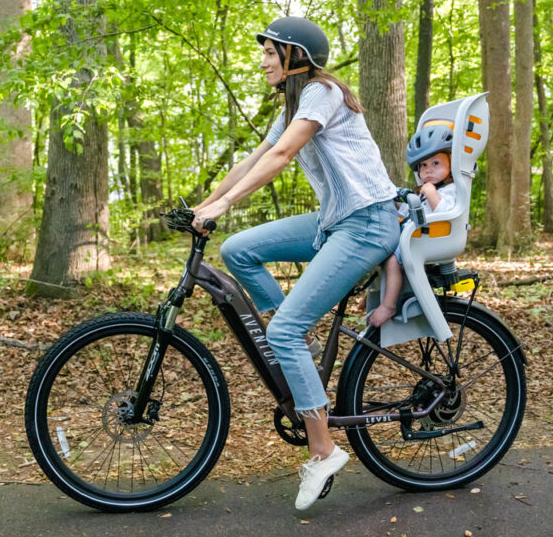
This category should preserve what legitimate e-bikes were originally intended to be: actual bicycles with a battery and an electric motor that provides assistance to the cyclist but does not do all the work.
Category Definitions
A reasonable definition, that largely follows the CPSA and accounts for e-bikes developed after 2002, would include:
- Fully operable pedals
- Functional bicycle drivetrain
- Motor rated at 750 watts or less
- Class 1, 2, or 3 operational class
- 20 mph motor-assisted speed cutoff for Classes 1 and 2
- 28 mph motor-assisted speed cutoff for Class 3
- Weight limit (<= 120 pounds)
These definitions allow e-bikes in all 3 classes to retain legal bicycle status in the states, as the CPSA intended.
Category Regulations/Requirements
So this means:
- No registration or VIN requirements
- No insurance mandate
- No operator license
This category would require the standard bicycle rules, but add appropriate age and helmet standards. Specifically, a state law aimed at protecting everyone and promoting responsible and safe bicycle use would:
- Prohibit e-bike use by people under 15
- Require an “e-bike competency” course for riders 15-18 that could be managed by state-approved entities
- Require helmets for all riders under 18, regardless of bicycle type (standard or power-assisted)
- Strong encouragement of helmet use for adults
The definitions largely mirror the three-class model already adopted broadly across the U.S. and reflected in model e-bike legislation (here). Additionally, the requirements largely mirror what many municipalities have already enacted. Encoding these in state law would make the hodgepodge of local ordinances unnecessary.
Ingredient Two: “High-Power Electric Biycles” Category
Today, a device that exceeds 750 watts may fall straight into moped or motorcycle regulation in some places.
That can be disproportionate, and is unfortunately where many current laws fall apart, causing both confusion in the media and the public, as well as stirring up anger among people who don’t think their device is a motor vehicle.
A more balanced system would create an intermediate category. Since the CPSA classifies devices 750 W or under as “low-powered electric bicycles”, we can call this category: “High-Power Electric Bicycle”.
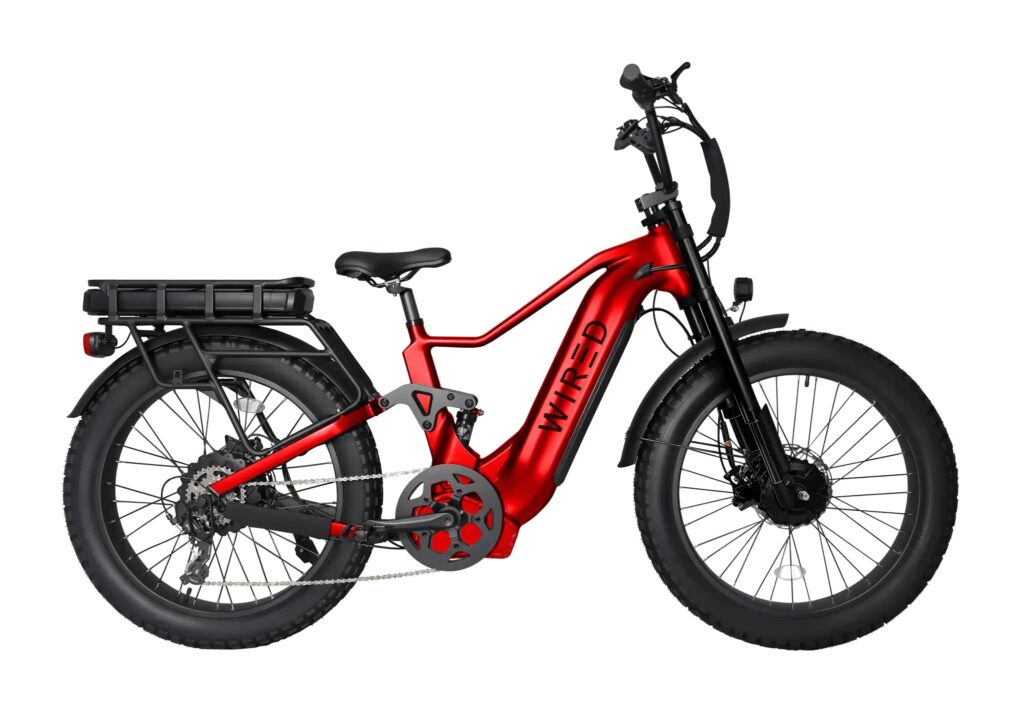
Since the Federal Motor Vehicle Safety Standard (FMVSS) law deliberately doesn’t define a difference between this category and the next (mopeds/e-motos), creating this category in state laws would address the seeming disparity while still adhering to both the CPSA and FMVSS. States could still consider “high-power electric bicycles” as motor vehicles in certain situations (i.e., commercial use rather than personal), but not require the same “across-the-board” licensing and insurance requirements that mopeds, nopeds, and e-motos require.
Category Definitions
Criteria for this “middle-ground” category would include:
- 751 to 2,000 watt electric motor
- Top motor-assisted speed capped at 35 mph
- Fully operable pedals required
- Weight limit (perhaps 150 pounds)
- Must meet lighting and braking standards like motor vehicles
Category Regulations/Requirements
Requirements would include:
- Vehicle identification number or serial number registration, which could be offered free of charge
- Basic equipment inspection performed by either police or local bike shop certified to perform inspections
- Minimum rider age (15 or 16)
- Helmet required for all riders regardless of age
- No operator license required (except for commercial use)
- No insurance mandate (except for commercial use)
- No motorcycle endorsement required
This creates accountability without treating modestly higher-power machines like motorcycles.
A Category That Acknowledges Reality
This category also acknowledges a reality that unfortunately too many lawmakers ignore.
Some cargo bikes, adaptive bikes (particularly for the disabled), and heavier utility bikes may benefit from having a 750-2,000 watt motor without being labeled as “dangerous” motorcycles. This category would certainly cover models like the Aventon Abound and similar cargo bikes, as well as some (though not all) of the Wired brand “power performance” devices, many of which are used for recreation, not for business purposes.
Where This Category Needs Additional Attention
Sometimes, devices that would fall into this category are used in a commercial setting; that is, by delivery drivers and couriers in urban settings where using a cargo e-bike may be considered faster and easier than a car or truck.
So, special rules could be applied to commercial use of devices in this category, that would require operator licensing and insurance coverage, and could also require annual equipment safety inspections, rather than an initial inspection upon registration of the vehicle for pleasure-use vehicles in this category.
Naturally, such commercial uses in urban areas should require that operators still pedal, and follow the same “rules of the road” as other motor vehicles.
Ingredient (Category) Three: Electric Mopeds and E-Motos
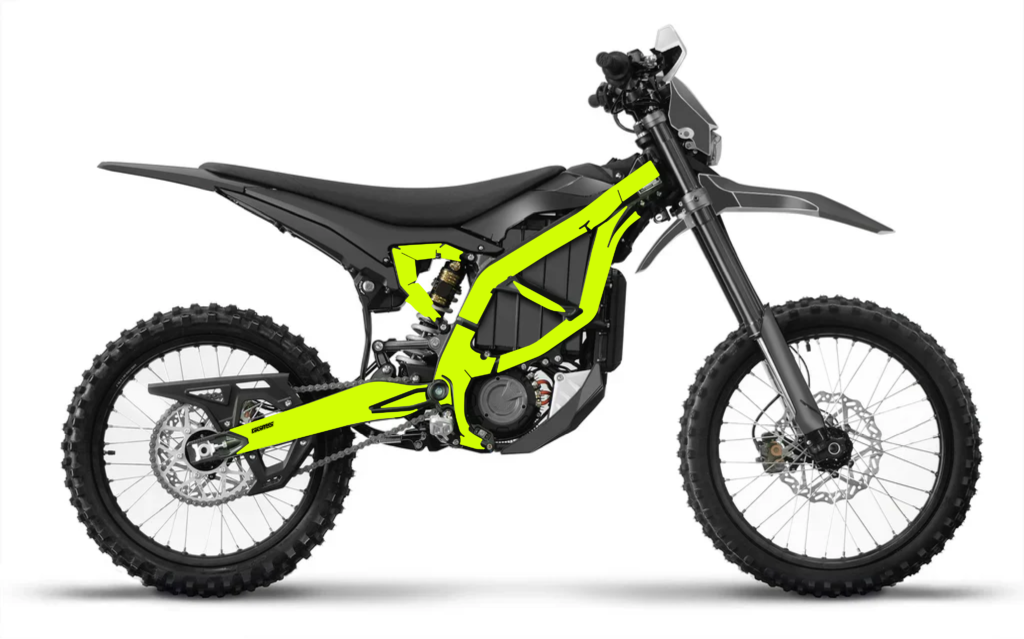
Once a machine crosses clearly into motorcycle-like territory, the law should say so plainly. Both the CPSA and FMVSS are clear on one thing: electric mopeds, nopeds, and e-motos are absolutely not e-bicycles, and should be treated as motor vehicles.
Category Definitions
This category would include any electric two-wheeler with:
- Motor greater than 2,000 watts
- Speeds over 35 mph
- Motorcycle-style operation (hand/twist throttle)
- Excessive weight (150+ pounds)
- Nonfunctional or token pedals
- Foot pegs or nonfunctional cosmetic pedals replacing real bicycle ergonomics
These are motor vehicle standards for motorcycles, so this category must be regulated exactly the same as any other motor vehicle.
Category Regulations/Requirements
For this category, the requirements are the same as for gas-powered motorcycles. That means:
- Registration
- Title
- Insurance
- Operator licensing
- Equipment standards
- VIN compliance
- Operator training
That is fair, because at some point, a vehicle stops behaving like a bicycle – and a good law would recognize that.
Ingredient 4: Solving The Pedal Argument
The “pedal argument” deserves special attention in any state law.
Some e-motos use decorative pedals largely to chase bicycle classification. But that undermines legitimate e-bikes and vastly increases confusion.
A fair law would require pedals to be:
- Fully operable
- Capable of meaningful human propulsion
- Connected to a functioning drivetrain
- Not merely cosmetic
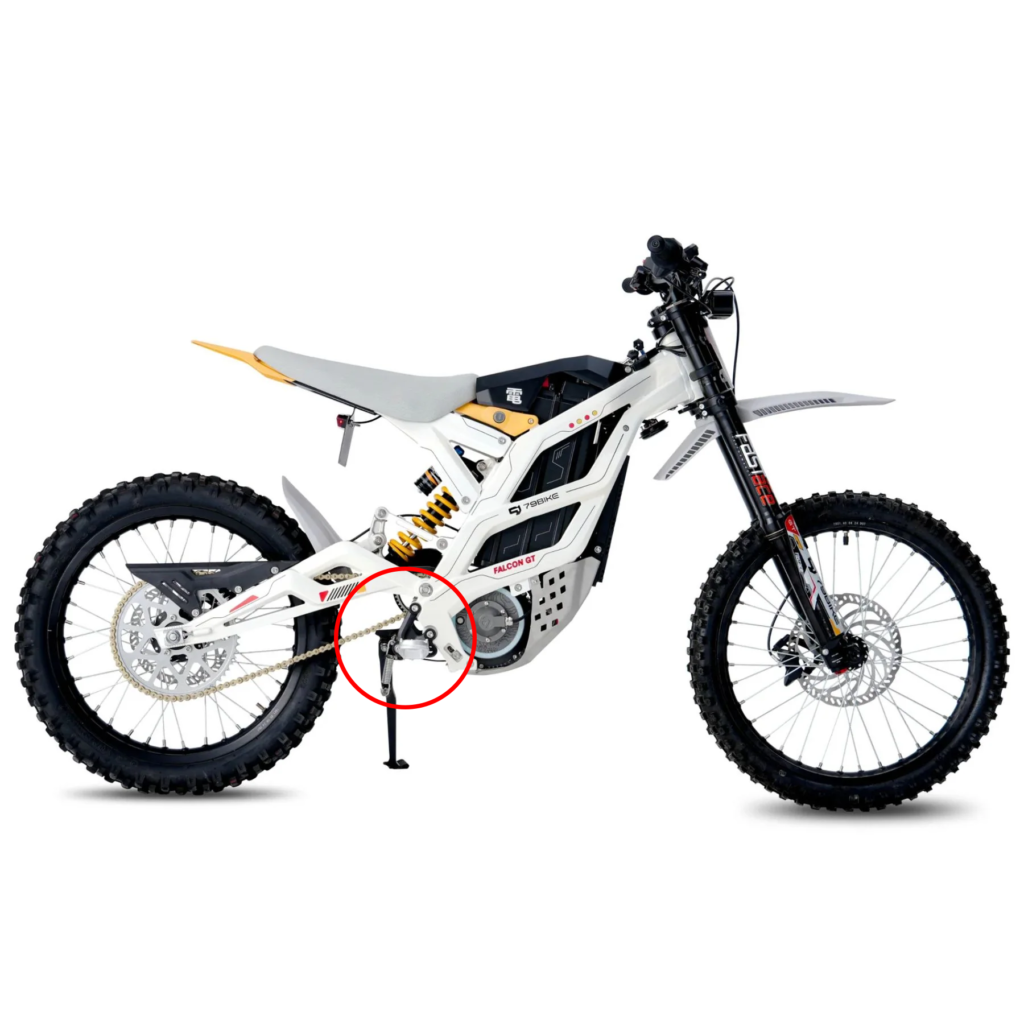
To qualify as an e-bike, the device needs to have operating pedals that are used to propel the vehicle whether or not the motor is activated. Add-on cosmetic “pedals”, stationary footrests that look like pedals, or foot pegs do not satisfy the definitions as noted above. If the pedals are effectively fake, it doesn’t matter if society wants to use lazy, colloquial language to call something a “bike”, legally, such a device cannot qualify as an e-bike.
This is where several recent legislative efforts have moved – focusing more on truthful classification and punishing mislabeling.
Ingredient 5: Focusing More on Speed Than Wattage Alone
This may be controversial. But speed is often a better measure of real-world risk than raw wattage may ever be.
A heavy cargo bike using 1,000 watts to climb hills at 20 mph may present less risk than a lightweight machine using 750 watts to operate aggressively at 28 mph. The first example is a technical criterion, but the second is all on the operator, not the device.
That’s why speed-based regulation often makes more sense. Wattage must remain part of the framework, but it should not be the only factor.
Fair laws would not just rely on technical specifications, but also would be heavily weighted toward operator behavior.
Ingredient 6: Properly Aligning Path Access With Vehicle Classification
Whether a vehicle is legal on roads is one question. Whether it belongs on a natural-surface or paved multi-use trail is another.
This is another issue lawmakers often confuse, and it’s all caused by their own confusion about the devices, not about the technical specifications.
So where someone can ride whatever type of device, needs to be addressed properly.
States will typically regulate the type of traffic (foot, bicycle, dirt bike/motorcycle) that is permitted within properties under state control (aka state parks), depending on the terrain, visitor density, and other factors. On the other hand, states won’t usually attempt the same thing for local trails not under state jurisdiction.
The result is that local governments have created another hodgepodge: this time, of local ordinances ranging from “any e-bike is permitted”, to “no e-bike is permitted.”
This is problematic, particularly when those same jurisdictions permit traditional bicycles but not e-bicycles to use their local trails. Not only is such a policy severely discriminatory, it exposes that municipality to legal action by disabled persons who can only use an e-bicycle due to ADA-defined disabilities.
The Single Standard
So, a reasonable approach would be to create a single standard that all municipalities can follow, bearing in mind that there may be certain unique situations that would limit a specific recreational trail’s access to foot traffic only.
That single standard would look like this:
- Class 1: allowed where non-power-assist bicycles are allowed
- Class 2: allowed where non-power-assist bicycles are allowed
- Class 3: roadway and transportation use, some recreational trail access (where permitted)
- High-Power Electric Cycles: road use only unless specifically authorized (certain paved trails/greenways)
- E-Motos: motor vehicle rules apply, no trail/greenway use at all, may use dedicated off-road “dirt-bike” trails
That approach protects trails without redefining bicycles or vehicles beyond the Federal classifications.
Practicing The Rules
Of course, such a standard would also require all cyclists to actively and consistently practice standard rules of cycling etiquette wherever they are riding. Cycling etiquette includes (but is not limited to):
- obeying posted speed limits
- obeying traffic signals and signs
- yielding for pedestrians at crosswalks
- signaling intentions to turn and stop
- providing advance warning when intending to pass pedestrians or other cyclists
- decreasing speed significantly when passing
- riding single-file when passing or being passed
- not riding more than two abreast when not passing or being passed
When all cyclists practice standard etiquette and rules of trails and roads, they not only lead by example, but keep themselves, pedestrians, and vehicle drivers safer.
Ingredient 7: Include Manufacturer Truth-in-Labeling Rules
This is essential. Manufacturers should not be allowed to market an electric motorcycle as an e-bike.
Unfortunately, a patchwork of weak regulations, or sometimes no regulation, easily allow manufacturers of e-bikes and e-motos to exploit loopholes in Federal and state laws. The result is that manufacturers can be tempted to engage in deceptive practices to market their high-powered e-motos as “e-bikes” instead of the motor vehicles that they actually are.
The best answer would be a Federal law requiring truth-in-labeling rules.
Currently, there are several Federal statues that could theoretically apply. These include the Fair Packaging and Labeling Act of 1966, and section 5 of the Federal Trade Commission Act (originally enacted in 1914).
But regarding e-bikes and e-motos, the issue usually falls under deceptive or misleading representation, not labeling format. This is why the FTC Act may be more relevant than the FPLA alone.
Until such time as the Federal government acts to craft a law specific to e-bike and e-moto “truth in labeling”, states will have to step up to the plate.
However, to avoid 50 states creating 50 different versions of a “truth in e-bike/e-moto labeling” law, they could work together to create a unified standard that would include the following clearly indicated on the device (device label):
- Vehicle classification
- Motor rating
- Top assisted speed
- Weight
If a device does not legally qualify as an e-bike, it should not be permitted to be marketed as one. Simple.
Manufacturers should also be required to inform the customer of these specifics, as well as whether state registration and licensing is required, prior to purchase. Bike shops selling devices as a dealer for these devices should also be required to inform the customer of these particulars prior to purchase.
Enforcement actions for violations could include hefty fines, or even prohibition of sales within a state.
But as I mentioned above, it would make much more sense, cause less interstate confusion to the bicycle and e-moto industries, and enable standardized enforcement, if the “truth-in-labeling” concept was legislated at the Federal, not state, level.
Ingredient 8: Make Enforcement Realistic
Another overlooked problem:
A law nobody can reasonably enforce is not good law. Fair rules should rely on things officers and consumers can actually verify.
That means emphasizing:
- Labeling
- Speed limits
- Equipment standards
- Observable vehicle characteristics
This would eliminate endless debates over whether a motor is “really” 749 watts or 751 watts. That kind of precision may sound serious, but it solves little.
What This System Would Accomplish
States following the ingredients above would:
- Protect legitimate e-bikes.
- Create a sensible middle ground for moderate higher-power electric cycles.
- Move true e-motos into proper motor vehicle regulation.
- Reduce confusion.
- Discourage deceptive marketing.
- Improve fairness.
- And align rules more closely with actual risk.
That is what good law is supposed to do.
A Sample Model Structure
In simple terms:
Category 1 — Electric Bicycle
Up to 750 watts
20–28 mph by class
Bicycle rules
Category 2 — High-Power Electric Cycle
751–2,000 watts
Up to 35 mph
Intermediate rules
Category 3 — Electric Moped / E-Moto
Above 2,000 watts or over 35 mph
Motor vehicle rules
That is clear, scalable, and most importantly – people could actually understand it.
Final Thoughts
The question should not be whether e-bikes should be regulated or unregulated.
The real question is whether laws should distinguish between low-risk bicycles, moderate-risk electric cycles, and true electric motorcycles in a way that is rational and fair.
They should.
A sensible state law would preserve legitimate e-bikes, stop electric motorcycles from slipping through bicycle loopholes, and avoid forcing every machine above 750 watts into full motorcycle treatment.
That is not anti-e-bike.
That is not anti-e-moto.
That is simply drawing lines where they make sense.
And that may be the most logical place for state law to begin.


